Table of Contents
- What Is an MRI Scan and Why Is It Performed?
- What Happens Before an MRI Scan?
- Step-by-Step MRI Scan Procedure
- Step 1: Changing and Getting Ready
- Step 2: Getting Comfortable on the MRI Table
- Step 3: Moving Inside the MRI Machine
- Step 4: Hearing the Scanner Sounds
- Step 5: Staying Still During the Scan
- Step 6: Contrast Injection, If Required
- How Long Does an MRI Scan Take?
- What Happens After an MRI Scan?
- Is an MRI Scan Painful or Uncomfortable?
- When Should You Contact an MRI Centre Before Your Appointment?
- Why Choose Ovale Healthcare for an MRI Scan in Jaipur?
- Conclusion
- FAQs
- How long does a complete MRI scan take?
- Can I eat or drink before an MRI scan?
- Do I need to remove all my clothes during an MRI?
- Is an MRI scan painful?
- Can I move during an MRI scan?
- When will I receive my MRI report?
- Is an MRI scan safe for everyone?
If you’ve never had one, an MRI can feel like stepping into the unknown. The machine looks big, the room is full of equipment, and nobody has told you quite what to expect. Take a breath, because an MRI scan in Jaipur is a safe and painless test. It uses a strong magnetic field and radio waves to create detailed images of what’s happening inside your body, without any ionising radiation. Most people find it far easier than they feared once they know the steps. In this blog, we cover the preparation, the procedure itself, how long it takes and what the experience feels like.
What Is an MRI Scan and Why Is It Performed?
MRI stands for magnetic resonance imaging. Instead of X-rays, the MRI procedure uses magnets and radio signals to build cross-sectional images, and it’s particularly good at showing soft tissue like muscles, nerves, discs and organs. Doctors usually ask for one when symptoms need a closer look than a basic X-ray or ultrasound can give.
Here are the areas it’s most often used to examine:
-
The brain and spinal cord, for headaches, dizziness or nerve-related symptoms
-
The spine and joints, to check for disc problems, ligament tears or arthritis
-
The abdomen and pelvis, including the liver, kidneys and reproductive organs
-
Blood vessels, when doctors need to see how blood is flowing
Every body part needs its own set of scans, which is why the range of MRI scan services in Jaipur covers so many different examinations. For a quick comparison with other imaging, see MRI vs CT Scan: Key Differences. In the end, the result is the same: your doctor gets a clearer view of what’s causing your symptoms and can plan the right treatment.
What Happens Before an MRI Scan?
Preparation is simple, but it matters. Good MRI scan preparation starts the moment you arrive, and our team will usually:
-
register you and check your doctor’s prescription
-
go through your medical history and any earlier reports
-
screen you for pacemakers, implants, metal fragments and other safety concerns
-
ask about pregnancy, allergies or kidney problems where relevant
-
ask you to remove jewellery, watches and other metal items
-
explain any fasting or medication instructions for your scan
The screening is thorough because the magnet is extremely strong, and metal near it can be dangerous. Safe equipment and attentive staff make a big difference. If you are wondering how to choose the best MRI centre in Jaipur, remember to look beyond affordable costs.
Step-by-Step MRI Scan Procedure
Knowing the MRI scan process step by step takes away most of the surprise. Here’s what happens once you’re called in, in the order you’ll experience it.
Step 1: Changing and Getting Ready
You may be asked to change into a gown, as zips, buttons and underwire can interfere with the images. Your jewellery and other metal items go into a locker.
Step 2: Getting Comfortable on the MRI Table
Then you lie back on the table, and the technologist adjusts your position for whatever’s being scanned. A pillow under your knees or a strap helps you stay put.
Step 3: Moving Inside the MRI Machine
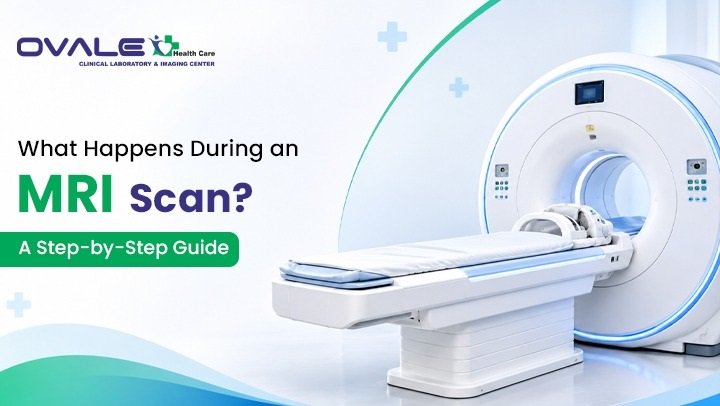
Next, the table moves into the scanner, a wide tunnel that’s open at both ends. For a head or knee scan, a small device called a coil is placed around that area.
Step 4: Hearing the Scanner Sounds
The scanner is noisy, and that surprises most people. Expect loud tapping and knocking while it captures images, which is completely normal. Many centres provide earplugs or headphones to keep it comfortable.
Step 5: Staying Still During the Scan
Even small movements can blur the images, so staying still really helps. The technologist can see and hear you the whole time through an intercom, so you can speak up whenever you need to.
Step 6: Contrast Injection, If Required
A few scans need a contrast material, given through an IV line, while many don’t. Your doctor’s request and the scan protocol decide whether you’ll need it.
How Long Does an MRI Scan Take?
It depends on the body part and the type of examination. Most routine scans take around 20 to 60 minutes, while complex ones can take longer.
Extra sequences or contrast add time, and they can change the final bill too. Scan type, requirements and contrast all shape the price, and our guide on MRI Scan Cost in Jaipur explains how.
What Happens After an MRI Scan?
Once the images are done, the technologist helps you off the table, and most people go straight back to their day after a routine scan. If you had contrast, you may be asked to drink plenty of water and told what to watch for.
A radiologist then reviews the images and prepares your report, which goes to you or your referring doctor. MRI scan side effects are uncommon and usually mild, such as a cool feeling or slight nausea after contrast.
Is an MRI Scan Painful or Uncomfortable?
The scan itself doesn’t hurt. What bothers some people is lying still for a while, the noise or the enclosed space.
If you feel anxious, tell us early. We can reassure you, adjust your position or pause the scan if you need a moment.
When Should You Contact an MRI Centre Before Your Appointment?
A quick call before your visit lets the team plan your scan safely. Reaching your MRI centre in Jaipur early also saves time on the day. Please get in touch if:
-
You have a pacemaker or another implanted medical device.
-
You have metal fragments or a history of metal-related injury.
-
You are pregnant or may be pregnant.
-
You have kidney problems or a previous contrast reaction, and contrast may be required.
-
You feel claustrophobic or find it hard to stay still.
Why Choose Ovale Healthcare for an MRI Scan in Jaipur?
At Ovale Healthcare, we offer MRI services that prioritise safety and comfort. If you need an MRI test in Jaipur, we guide you through every stage, from your first question to your final report. You can expect:
-
verified safety screening before every scan
-
friendly support for first-time and anxious patients
-
trained imaging professionals who explain each step
-
reports reviewed by a radiologist
Ready to book? Contact Ovale Healthcare to enquire about an MRI appointment.
Conclusion
An MRI looks intimidating from the outside, but the steps are simple: screening, positioning, scanning and a report from a radiologist. Knowing what’s coming makes the whole thing far less stressful. Follow your doctor’s instructions and tell the team about any worries before you begin. If you’re planning an MRI scan in Jaipur, contact Ovale Healthcare for appointment information.
FAQs
How long does a complete MRI scan take?
Most scans take 20 to 60 minutes, depending on the body part. Contrast or extra sequences can add a little time.
Can I eat or drink before an MRI scan?
It depends on the scan. Abdominal and contrast scans sometimes need fasting, so follow the instructions you’ve been given.
Do I need to remove all my clothes during an MRI?
No. You may be asked to change into a gown or wear metal-free clothing, depending on the area being scanned.
Is an MRI scan painful?
No, the scan itself is painless. Lying still or the noise can feel uncomfortable for some people.
Can I move during an MRI scan?
Try to stay still while the scan is running. Movement can blur the images. If you need a pause, tell the technologist.
When will I receive my MRI report?
A radiologist reviews your images. Then they prepare the report. The team will tell you the exact timing at your appointment.
Is an MRI scan safe for everyone?
Not always. People with pacemakers, certain implants or metal fragments may not be able to have one, so screening is essential.
Need a test or scan? Book it today.
Accurate reports, trained technicians and quick turnaround in Jaipur.